 its the best place to visit with family in holidays ,there are lots of land and water rides surely kids will enjoy it  variety of hotels with variety of food available inside compound please keep Nylon dress (compulsory) if you are going for water ride drinking water, rest rooms and lockers are available  Operated by Arun K Chittilappilly and Kochouseph Chittilappilly, Wonderla currently owns and operates three amusement parks one each in Kochi, Bangalore and Hyderabad With a large no of varied rides, Wonderla is the best place to entertain and provide fun for all age-groups. Wonderla Kochi spread over 35 acres of land is thrilling to visitors  | |
|---|---|
Monday, 1 October 2018
Wonderla...kochi


Vagamon(Wagamon) ..3 beautiful hills called Thangal hill, Murugan hill and Kurismala
Vagamon
 |
| vagamon hill |
The hill station has a chain of 3 beautiful hills called Thangal hill, Murugan hill and Kurismala that give an enchanting feel to this beautiful hill station.
Far way from the loud city culture,1100 meters above sea, lush
greenery and serenity is a gift for every visitor
Vagamon, also called Wagamon, is located in Meenachil taluk and Kanjirappally taluk of Kottayam district and Peerumade taluk of Idukki district of the state of Kerala, India.
 |
| vagamon pine forest |
The first place you should visit in Vagamon is the Vagamon Pine forest, which is the major tourist attraction of this place. This forest is actually a man-made forest which was created during the British era.
The
other major tourist attraction in Vagamon is the Marmala Waterfall.
Located along the Erattupetta route, the Marmala Waterfall is an epitome of the serenity and tranquillity of Vagamon itself.

Located along the Erattupetta route, the Marmala Waterfall is an epitome of the serenity and tranquillity of Vagamon itself.

Vagamon hill station is comprised of a beautiful series of hillocks, valleys and cascading waterfalls that make it the ideal getaway for tourists. Take a walk along the narrow, mist covered zigzag roads that wind up the hills and experience true bliss.
For adventure seekers, there is an option of trekking, para gliding or rock climbing and horse raiding.

Thangalpara, which is essentially a place of pilgrimage, is also one of the best viewpoints of Vagamon, offering breathtaking views of the entire valley below, surrounded by mountains on all its sides. it has religious significance as it was once the resting place of Hasrath Sheikh Fariduddin Baba, a revered Sufi Saint.
Vagamon Lake is another crowd-puller, and while the lake is not exactly huge, it is big enough to offer rowing, boating and other water activities.
For adventure seekers, there is an option of trekking, para gliding or rock climbing and horse raiding.

Thangalpara, which is essentially a place of pilgrimage, is also one of the best viewpoints of Vagamon, offering breathtaking views of the entire valley below, surrounded by mountains on all its sides. it has religious significance as it was once the resting place of Hasrath Sheikh Fariduddin Baba, a revered Sufi Saint.
Vagamon Lake is another crowd-puller, and while the lake is not exactly huge, it is big enough to offer rowing, boating and other water activities.
 |
| lake |
One of India’s topmost adventure tourism spot, with activities such as trekking, rock climbing and paragliding being offered to tourists.
Cycling through the mountains is another interesting
activity that visitors can participate in to get a better feel of the
place.
The Vagamon hill station offers you a unique and different environment when comparied to other hill stations of Kerala. Besides, being abundant in natural beauty, the place also offers space for spiritual activities.
The peaceful surroundings with cool and soft breeze blowing across the valley makes it a perfect place for meditation.
Accommadation :Green palace residency ( i stayed in this place .its good,clean and cool climate)
 |
| green palace residency |
Nearest cities: Elappara, Erattupetta
Sunday, 30 September 2018
A baloon WATER zorb... water ball or water walking ball..

A water ball or water walking ball is a large sphere that allows a person inside it to walk across the surface of a body of water with out sinking
The ball is usually two meters in diameter and has a entrance with zipper that allow for easy entry and exit.

The water balloon walking requires excellent balancing.
The air is pumped inside the ball after the person entered in to the ball and the zip is closed air tight

The water ball is similar to zorb ball but it has only one layer and is designed for water travel rather than down-hill rolling.
This 10 minute activity promises to give you the giggles as you try to meander through the water surface.

The person who have claustrophobia (fear of closed space) do not do this zorbing.
This activity is fun and can be availed by people who are interested
>>----THANKS FOR VISITING MY BLOG...KEEP IN TOUCH------>
Thursday, 27 September 2018
Tea processing

Tea processing is the method in which the leaves from the tea plant Camellia sinensis are transformed into the dried leaves for making tea.
Procedure
- Plucking: Tea leaves and flushes, which includes a terminal bud and two young leaves, are picked from Camellia sinensis bushes typically twice a year during early spring and early summer or late spring. . Picking is done by hand when a higher quality tea is needed, or where labour costs are not prohibitive. Tea flushes and leaves can also be picked by machine, though there will be more broken leaves and partial flushes reducing the quality of the tea.
- Withering / Wilting: . Withering is used to remove excess water from the leaves and allows a very slight amount of oxidation. it can be done outdoors, controlled withering usually takes places indoors. Freshly plucked leaves are laid out in a series of troughs and subjected to hot air forced from underneath the troughs.The process is also important in promoting the breakdown of leaf proteins into free amino acids and increases the availability of freed caffeine, both of which change the taste of the tea.

- Disruption: The leaves may be lightly bruised on their edges by shaking and tossing in a bamboo tray or tumbling in baskets. More extensive leaf disruption can be done by kneading, rolling, tearing, and crushing, usually by machinery.The bruising breaks down the structures inside and outside of the leaf cells and allows from the co-mingling of oxidative enzymes with various substrates, which allows for the beginning of oxidation.

- Oxidation / Fermentation: For teas that require oxidation, the leaves are left on their own in a climate-controlled room where they turn progressively darker. This is accompanied by agitation in some cases. In this process the chlorophyll in the leaves is enzymatically broken down, and its tannins are released or transformed. This process is sometimes referred to as "fermentation" in the tea industry.

- Fixation / Kill-green: Kill-green is done to stop the tea leaf oxidation at a desired level. This process is accomplished by moderately heating tea leaves, thus deactivating their oxidative enzymes and removing unwanted scents in the leaves, without damaging the flavour of the tea. Fixing is carried out via steaming, pan firing, baking or with the use of heated tumblers.

- Drying In order to keep the tea moisture-free, they are dried at various stages of production. Drying enhances a tea’s flavors and ensures its long shelf-life. Also, drying brings down the tea’s moisture content to less than 1%. To dry the leaves they are fired or roasted at a low temperature for a controlled period of time, typically inside an industrial scale oven. If the leaves are dried too quickly, the tea can turn abrasive and taste harsh.
- Aging
Some teas are subjected to aging and fermentation to make them more palatable. Some types of Chinese Pu-erh, for example, are aged and fermented for years, much like wine.


>>----THANKS FOR VISITING MY BLOG...KEEP IN TOUCH------>
Vellayani Lake, or Vellayani Kayal ..trivandrum

Vellayani Lake, or Vellayani Kayal as known in local language,
It is a Popular picnic spot amidst tourists as well as locals, it bustles with activity during the festivities of Onam when traditional boat race is organized here.
The lake covers an area of 7.5 sq km, Vellayani is the largest freshwater lake in Thiruvananthapuram of Kerala, India.
we can buy fresh live (kayal meen...) lake water fish from fish catchers directly from their small hand peddled boat from 8am to 11am
 |
| thilapia fish |
 |
| karimeen (pearl spot fish) |
It is around 9 km away from the Thiruvananthapuram Central Bus Station at Thampanoor.
Buses go to Vellayani Lake from East Fort also.
It is at a distance of 7 km from Kovalam through Poonkulam junction.

Lakkam Waterfalls.....Munnar

It is situated in - Udamalpet road between Rajamalai and Marayoor on Munnar

Height of over 50 feet, this wide and scenic waterfall is situated in dense forest. The water is collected into a small pool at the bottom and it offers a great opportunity to play in the pure waters of the Lakkam Waterfalls.
The Lakkam Waterfall cascades down from the rocky cliffs of Eravikulam Stream which is originated in the Eravikulam National Park. This stream is a tributary to Pambar River which is merged in to River Cauvery and provide plenty of opportunities to take amazing pictures.

The waterfall is situated close to the main road and needs a little walk for 10 minutes to reach from the road.

Post monsoon season between October and January is the best season to visit the falls for best experience though the falls carry good flow of water till March.

You can sit back and admire the beauty of the fall, or you can indulge in adventurous activities, the place has something to offer to all kinds of visitors.
The ‘Vaga trees’ that surround the waterfall is a captivating sight for the visitors.
You can take a dip into the crystal clear natural swimming pool under the waterfall, or you can just sit idle twiddling your foot into the water.
Strolling through the Lakkam forest will be an exciting experience for you.
The pristine beauty of the forest can be witnessed and you will enjoy nature embraced trip.
- You have to pay the entrance fee (Rs.10)
- Visiting time at the is 8 AM to 5 PM.
- When you step into the rocks, be careful as the rocks are slippery.
- The restroom is available for the visitors. Take a pair of a dress if you wish to take a dip in the water. The changing room is provided for changing clothes..
it is better to visit the place during or after the monsoon.
October-January constitutes the post-monsoon season and this is the best time to visit waterfall. Avoid summer season to visit the waterfall as the waterfall can be scanty that time.
Location
Lakkam waterfalls is situated on Munnar-Udumalpet road near to Marayoor.
To reach Lakkam waterfalls by Air is Cochin International Airport and Madurai International airport
Railway stations to Munnar are Aluva , Ernakulam Jn , and Madurai .
By road, you can reach here easily from Munnar town.
It takes only 1.5km from Marayoor to reach Lakkam waterfall.
Address: Munnar - Udumalpet Road, Near Eravikulam National Park, Marayoor, Kerala 685620

Wednesday, 26 September 2018
Marina Beach...chennai.. India’s longest and world’s second longest beach.
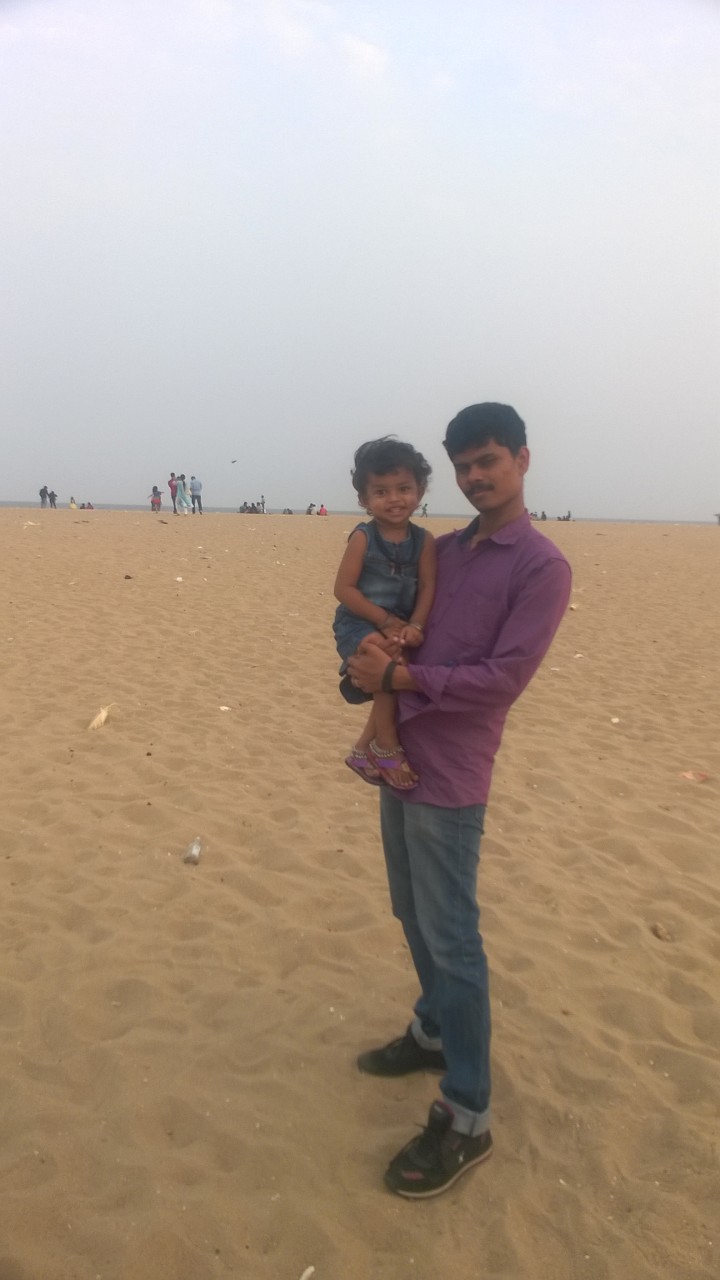
Marina Beach is a natural urban beach in Chennai, Tamil Nadu, India, along the Bay of Bengal.
Chennai’s Marina Beach happens to be India’s longest and world’s second longest beach. Stretching approximately 12 km, this beach is primarily sandy and is located on the eastern side of Chennai, adjoining the Bay of Bengal.
The beach runs predominantly sandy of nearly 12 kilometers extends from Beasant Nagar in the south to Fort St. George in the north.

The average width of the beach is 300 m and the width at the widest stretch is 437 m
.
Bathing and swimming are legally prohibited because of the dangers, as the undercurrent is very turbulent.
It is one of the most crowded beaches in the country and attracts about 30,000 visitors a day during weekdays and 50,000 visitors a day during the weekends and on holidays.
During summer months, about 15,000 to 20,000 people visit the beach daily.

The main attraction is the horseback rides and Flying kites which has become a favourite activity among both adults and kids
 |
| evening in marina |
Walking along the beaches during sunrise and sunset is a pleasant experience for all.

In the evening this beach becomes a fair ground with Various food stalls that offers murukku, sundal, ice-cream, handcrafted showpieces, ethnic jewelry, South-Indian snacks and Children play games activites
Marina beach is easily accessible by buses, taxis, two and three wheelers.
 |
| select fish which you want to eat |
Best Visiting Months: November to February. All days of the week
ENTRY FEE: No Entry Fee

| Location |
|---|
| Chennai (Madras), Tamil Nadu, India |

>>----THANKS FOR VISITING MY BLOG...KEEP IN TOUCH------>
Tuesday, 25 September 2018
Vattakottai Fort,,, 'Circular Fort,...between sea and western ghats

Vattakottai Fort (or 'Circular Fort') is a seaside fort near Kanyakumari, Tamil Nadu the southern tip of India.
{Vattakottai Fort has been declared as protected site and come under the administration of Indian archaeological department. It has been restored and developed as a tourist attraction.}

It was built in the 18th century as a coastal defence-fortification and barracks in the erstwhile Travancore kingdom.

It was constructed under the supervision of Captain Eustachius De Lannoy, an ex-Dutch naval officer of the Dutch East India Company, who became commander of the Travancore Army (the very army that defeated him in the Battle of Colachel) in the 18th century, after he earned the trust of the Travancore King Marthanda Varma
De Lannoy constructed Vattakottai, as part of the defence-fortifications he undertook throughout Travancore.
The fort is made of granite blocks and, this fort goes right into the sea on one end and bordered by the Western Ghats on the other. Such a strategic location makes it particularly interesting.

A major renovation of the fort was undertaken recently by the archaeological department, and the site is now a popular tourist spot.
Another interesting feature near the site is a beach of black sands.
It is about 7 km (4.3 mi) from Kanyakumari town.

Vattakottai Fort Timings: 8:00 am – 5:00 pm
Entry Fee :No entry fee
Highlights
- Best Time to Visit Morning, Afternoon, Evening
- Facilities Washrooms .Food Stalls
- Recommended Hours . 1 hour
- Best Visited With Group, Solo, Couple, Family
- Footwear, Camera Allowed
Phone:097514 16416
Vattakottai Fort Kanyakumari Address: Vattakkottai , Tamil Nadu, 629401, India

>>----THANKS FOR VISITING MY BLOG...KEEP IN TOUCH------>
Vandalur Zoo,...Arignar Anna Zoological Park,

Arignar Anna Zoological Park, also known as the Vandalur Zoo, is a zoological garden located in Vandalur, is in the southwestern part of Chennai, Tamil Nadu, about 31 kilometres from the Chennai Central and 15 kilometres from Chennai Airport

As the Zoo was quite cramped and did not meet the biological and behavioural needs of the animals,


In 1976, after detailed investigation the Vandalur Reserve Forest was selected for this purpose.
This place was sprawling over an area of about 512 ha ,
which is the largest zoological garden in India and the Indian Subcontinent and one of the largest in the world.
 |
| butterfly park |
In the beginning, the area was nothing more than a scrub jungle, with practically no tree cover.
 |
| zoo ticket rates |
The zoo authorities and people from surrounding villages collected seeds of different trees from neighbouring areas and afforested the zoo area.
It provided an environment similar to natural wilderness which helped to meet the biological and physiological need of the animals and birds.
 |
| reptile house |
The existing landscape was utilized as it is and all the animals were exhibited in large open moated island type enclosure with simulated environment.
The zoo in its new premises was officially opened to public on 24 July 1985
 |
| bicycles and batery cars are available |
The present area of the zoo has requisite natural vegetation for creating the naturalistic environment at the zoo.

Arignar Anna Zoological Park is one of the biggest zoos in South East Asia extending over an area of 602 ha.

Weekday
Zoo Visiting Hours
 |
| zoo map |
09:00 AM - 06:00 PM
Tuesday
Closed
Wednesday
09:00 AM - 06:00 PM
Thursday
09:00 AM - 06:00 PM
Friday
09:00 AM - 06:00 PM
Saturday
09:00 AM - 06:00 PM
Sunday
09:00 AM - 06:00 PM
Address: GST Road, Vandalur, Chennai, Tamil Nadu 600048
ph 044 22751089
fax 044 22750741
{i visited this zoo three times its very good ,large area and variety of animals .
its realy enjoyable for kids and adult}

ph 044 22751089
fax 044 22750741
{i visited this zoo three times its very good ,large area and variety of animals .
its realy enjoyable for kids and adult}

Subscribe to:
Posts (Atom)
vanchi....Vallam , Thoni,etc.....
These are water transport vessel that carries different names in different regions. The terms Vallam , Thoni,etc. are found in the early...

-
 A mangrove is a shrub or small tree that grows in coastal saline or brackish water . The term is also used for tropical coastal vegetati...
 -
 The Mudumalai National Park and Wildlife Sanctuary also a declared tiger reserve, lies on the northwestern side of the Nilgiri Hills in...