Wednesday, 10 October 2018

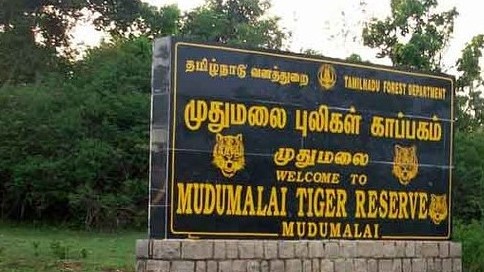
The Mudumalai National Park and Wildlife Sanctuary...tiger reserve, ( in Blue Mountains),


The Mudumalai National Park and Wildlife Sanctuary also a declared tiger reserve, lies on the northwestern side of the Nilgiri Hills in Nilgiri District, about 150 kilometres  north-west of Coimbatore city in Tamil Nadu

The name Mudumalai means ” the ancient hill range”. Indeed, it is as old as 65 million years when Western Ghats were formed.


It shares its boundaries with the states of Karnataka and Kerala
The sanctuary is divided into five ranges – Masinagudi, Thepakadu, Mudumalai, Kargudi and Nellakota.


The Tamil Nadu state government declared Mudumalai to be a tiger reserve, under section 38V of the Wildlife Protection Act of 1972, in an effort to conserve the country's dwindling tiger populations.

The protected area is home to several endangered and vulnerable species including Tiger, Elephant, Indian Gaur, 

Panther, Sambar, Spotted Deer,
Barking Deer, Mouse Deer, Common Langur, Malabar Giant Squirrel, Wild Dog, Mangoose, Jungle Cat, Hyena, among others.


There are at least 266 species of birds in the sanctuary, including  Malabar grey hornbill, Malabar pied hornbill, Malabar laughing thrush, Frog mouths and a variety of woodpeckersHornbills play an important role in dispersal of seeds.
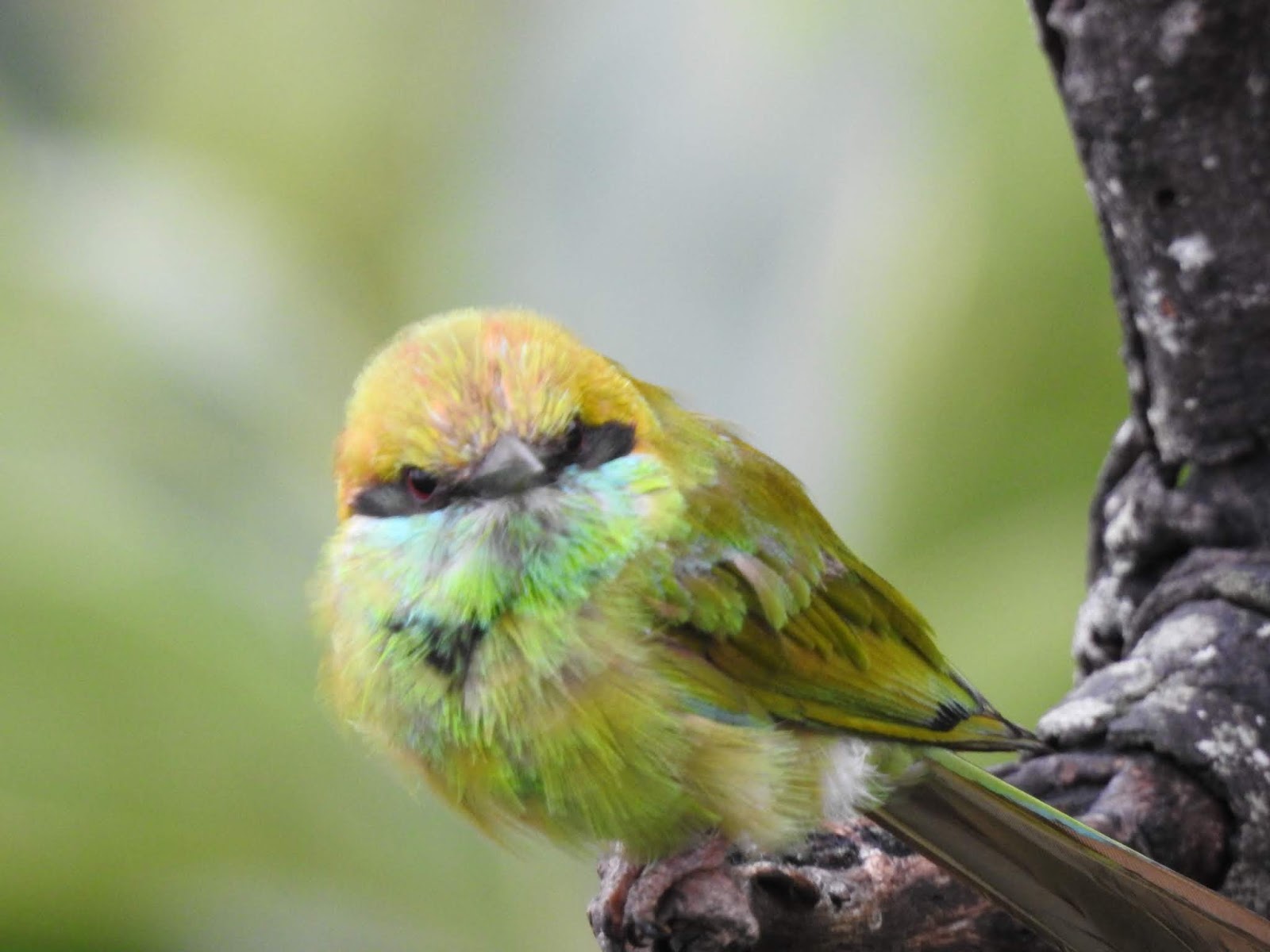
Malabar whistling thrush, peacock and jungle fowl are the other important bird species found in Mudumalai wildlife sanctuary.


The climate of Mudumalai is moderate- cold weather( December or January) and hot weather  (March and April.)


Location
By road it is about 240 Km from Bangalore, 90 Km from Mysore, 68 Km from (Ooty) and 124 Km from Calicut

(From Ooty, another approach is through extremely steep ghat road via Kalhatti having 36 hair-pin bends on a narrow risky road  at distance of 40 Km)

The nearest railway stations to Mudumalai are Mysore(100 Km )and Ooty about 68 Km

The nearest airports are Coimbatore (160 Km) , Bangalore (240 Km) and Calicut (124 km).
The nearest town for medical facility, petrol bunks  is Gudalur (15 Km) and Masinagudi (7 Km).


CLOSURE OF VEHICULAR TRAFFIC
prohibited the driving of the motor vehicles on this road from 10pmto6am .
The visitors are advised to plan their journey  accordingly.

ACCOMMODATION


Important points on Do’s and Dont’s

  • Abide by Tiger reserve rules.
  • Entry into the Tiger Reserve with permission is allowed during the specified hours only.
  • Obtain entrance permission from Reception Range Office at Theppakadu before the safari.
  • Don’t enter the park with weapons/explosives/crackers.
  • Do not carry any inflammable item with you during park safari
  • Dismounting & eating during safari is strictly not allowed.
  • Do not offer any eatable item to the birds or animals.
  • Do not chase or tease any animal or bird.
  • Do not get down from the vehicle. This is dangerous in the elephant habitat.
  • Wait for your turn for the elephant ride and follow instructions of mahaout.
  • Don’t carry any forest property with yourself as it will be considered as a criminal offense.
  • Consumption of alcoholic drinks and Smoking inside the reserve is strictly forbidden.
  • Be aware of fraudulent private jeep safari, they won’t take you into the reserve. So don’t get cheated, always prefer forest department’s vehicle safari.
  • Keep your all senses open during the safari and avoid loud conversations.
  • It is advisable to wear clothes of colors which match the natural surroundings like khaki, olive green, and some other dull colors.
  • Tiger reserve is not zoo: so don’t expect to see wildlife everywhere. Mudumalai Tiger Reserve is breathtaking even in the scenery.
  • Wildlife sight-seeing is a matter of chance. In a reserve, don’t expect to see all the animals. Please don’t get disappointed by not seeing the tiger, leopard or other bug jungle rarity. You can happily observe all the smaller interesting animals, birds and plants.
  • Polythene bags/Plastic bags, plastic articles like cups, plates, and pet bottles are banned in the Reserve.
  • Entry on foot, campfires, music, cooking, and littering within the Reserve is prohibited. 
  • Use of spot lights, speeding, blowing of horn etc is prohibited. Shouting, teasing, chasing, feeding, and baiting of animals is prohibited.
  • The best you can take out of the tiger reserve when you leave is the happy memory of a trip well spent. 
visit www.mudumalaitigerreserve.com for online booking.
(one of the best wildlife tourist destination)

>>----THANKS FOR VISITING MY BLOG...KEEP IN TOUCH------>

Mysore Palace..Ambavilas Palace...in 'City of Palaces', ಮೈಸೂರು ಅರಮನೆ

Ambavilas Palace (Kannada), otherwise known as the Mysore Palace , is a historical palace and a Royal residence at Mysore in the Indian State of Karnataka

An incredibly breathtaking example of Indo - Saracenic style of architecture,
It is the official residence of the Wadiyar dynasty and the seat of the Kingdom of Mysore. The palace is in the centre of Mysore, and faces the Chamundi Hills eastward.
Mysore is commonly described as the 'City of Palaces',

Mysore Palace was built in the year 1912 for the 24th Ruler of the Wodeyar Dynasty and is counted amongst one of the biggest palaces in the country.

The architecture of the palace is a harmonious blend of Hindu, Muslim, Rajput and Gothic styles

Mysore Palace is now one of the most famous tourist attractions in India,
It is the second most visited historical monument visited by both local and foreign tourists after the Taj Mahal.

Maharaja Krishnaraja Wodeyar IV and his mother Maharani Kempananjammanni Devi, commissioned the British architect Lord Henry Irwin to build a new palace.

The kings of Mysore were devotees of Goddess Chamundi, hence the palace's facing the Chamundi Hills.

It is a three-story stone structure with marble domes, and has a 145-foot five-story tower.
The palace is surrounded by a large garden.

In addition, there are numerous secret tunnels from the palace cellar leading to Srirangapatna, other palaces, and confidential areas.

Palace has three entrances: the East Gate (the front gate, opened only during the Dasara and for dignitaries), the South Entrance (for public), and the West Entrance (usually opened in the Dasara).

The conventional Dasara procession initiates from the palace on the 10th day or Vijayadashami , the central attraction of which is the idol of Goddess Chamundeshwari seated on a golden mantapa made of around 750 kg of gold.

 Attractions & Events

The Golden Throne was the royal throne of the rulers of the Kingdom of Mysore.
 It is kept for public viewing only during Dasara festival and on the rest of the days, it is dissembled and kept in safe lockers of the palace.

The Kalyana Mantapa, or marriage hall, is a grand,
The floor also displays a peacock mosaic, designed with tiles from England. Oil paintings illustrating the royal procession and Dasara celebrations of bygone years are displayed on the walls.
Sound & Light Show are arranged on all days between the same time, 7 and 7:45 in the evenings, except on Sundays and public holidays

The palace complex includes twelve major Hindu temples. Some of the famous temples are:

  • Lakshmiramana Temple, ( Lord Vishnu)
  • Someshvara Temple, ( Lord Shiva)
  • Shwetha Varahaswamy Temple,(Lord Varahaswamy, one of the 10 incarnations of lord Vishnu)
  • Sri Prasanna Krishna Swami Temple, ( Lord Krishna)
  • Sri Bhuvaneshwari Temple, ( Goddess Bhuvaneshwari)
  • Kodi Someshwaraswami Temple, ( Lord Shiva)
  • Sri Gayatri Temple, ( Goddess Gayatri)
  • Sri Trineshwara Temple,( Lord Shiva)

Visitor information

When was it built: Originally in the 14th century, later reconstructed/renovated several times
Who built it: Yaduraya Wodeyar (original one) and Krishnaraja Wodeyar IV (present )
Where is it located: Mysore/Musuru, Karnataka, India
Why was it built: Royal Palace
Architectural Style: Indo-Saracenic
Visit Timing: Daily, 10:00 am to 5:30 pm

Children below 7yrs are free to enter the palace, while those between 7-12yrs are charged Rs 25 per head.
For adults, tickets are available for Rs. 50.
Footwear are to be removed before entering the palace complexes.

How to Reach: One can reach Mysore by KSRTC bus, train or cab from Bangalore , which is well connected by train and air with major cities of India and by air with some international ones.

The palace is 1.8 km from the central railway station to its west,
1.4 km  from  bus-stand to its north-east,
9.5 km  from Mysore Airport,

>>----THANKS FOR VISITING MY BLOG...KEEP IN TOUCH------>

Sunday, 7 October 2018

Paradise Beach...Pondicherry ...Plage Paradiso,

At a distance of 8 km from Pondicherry Bus Station, Paradise Beach, also known as Plage Paradiso, is an isolated beach located at Chunnambar.

The peaceful and serene ambience of this beach has contributed to its name as Paradise beach as visitors and locals flock to this place to enjoy the cool evening breeze.

This is one of the most famous Pondicherry Beaches and also one of the best places to experience Pondicherry Tourism.
Paradise Beach is a popular attraction not to miss in a Pondicherry tour
The beach is extremely attractive as the sands are very clean and the water is crystal clear.
The Paradise Beach is situated close to Cuddalore main road

Visitors have to cross the Chunnambar backwaters by boat to reach Paradise Beach.becouse  this beach can be accessed only from the Chunnambar Resort via boats.

These boats leave from Chunnambar boathouse to paradise beach

The beach has shelters and palm trees for shade and protection from the sun and rain.
The rustle of coconut trees, the swishing of the waves and the feel of sand between your toes is sure to be etched in your memory for years to come.

 The tides at the beach are strong at times and it is not advisable to go deeper into the sea.

This beach is famed for its lovely sunbathing options and resting under the cool breeze of palm trees.
The beach is an ideal play to relax and play with family and friends. Since the beach is smooth and does not have any rough surface, it is also fairly safe for children to play.

Beach volleyball, water sports equipment, beach umbrellas, are also available at this beach for tourists.
One of the most popular highlights of the beach is the exciting boat house.
The cost of a boat ride to the beach is Rs. 75 per person.
There is no provision of any accommodation here and no outside liquor and food is allowed within the beach


Charges: Entry, Boat Rides, Camera, Food & Beverages are all chargeable
Boat Timings to Beach: 9 AM - 4 PM

Location of Chunnambar Resort
Pondy-Cuddalore Road, Nonankuppam, Puducherry 605101
Timings: 9:00am - 5:00pm daily

TOURISM INFORMATION CENTRE:No. 40, Goubert Avenue, Beach Road, Puducherry - 605001. Ph no 91-413-2339497, 2226744, Time8:00am to 12:30pm and 1:30pm to 5:30pm ,Pudukuppam, Puducherry.

>>----THANKS FOR VISITING MY BLOG...KEEP IN TOUCH------>

Chamundi Hills...hlii of Mahishasura Mardini..mysore ..


Chamundi Hills is located 13 km east of Mysore,  in Karnataka, India.
Its elevation is 1,000 metres (3,300 ft).

According to a legend, the Asura Mahishasura (king of the city Mysore) was killed by goddess Chamundeswari  after a fierce battle.

The goddess is also called Mahishasura Mardini.

Named after goddess Chamundi, the Chamundeshwari

Temple sits atop the main hill. The main hill itself features an ancient stone stairway of 1,008 steps leading to its summit.


Around this point, the steps become significantly less steep and eventually the climber is rewarded with a panoramic view of the city.The summit of the Chamundi hills offers a panoramic view of Mysore’s landmarks like the race course, the Lalitha Mahal palace, Mysore Palace, Karanji and Kukkarahalli lakes.

A key feature is the statue of Mahishasura bearing a sword in his right hand and a cobra in the left.
A colorful gigantic image of the demon, Mahishasura greets visitors as they reach the summit of the hill.
She is seated with her right heel pressed against the lowest of the seven chakras. This cross-legged yogic posture echoes the posture of Lord Shiva.

Chamundi Temple Mythology
The story of Devi Chamundi is - There were two Asura brothers, Sumba and Nisumba, who, strengthened by the boons received through severe penance, began to harass the Devas and the people

The Devas prayed to Devi Parvati, who took the form of a beautiful young maiden and came down to Earth.

The Asura brothers were smitten by her beauty and sent emissaries to try and entice her to come to them. When this failed, they tried force. But the young maiden killed the generals sent by the Asuras. Two of the generals were named Sandan and Mundan.

The Goddess took the ferocious Warrior form of Kali and destroyed them. As she killed Sandan and Mundan, she was called Samundi or Samundeshwari. Later this became  Chamundeshwari.

During the Dasara festival, on Vijayadashami, the Jumboo Savari,  traditional Dasara procession goes onto the streets of Mysore city. Idol of the Goddess Chamundeshwari which is placed on a Golden mantapa, on the top of a decorated elephant. Balarama, the elephant has been performing this great venture from the past 9 years.

Chamundi Temple Architecture


The temple is set on top of the Chamundi Hill. You can climb up a flight of 1000 steps or drive up a hill road. When you reach about halfway up the hill, you will come across a small Shiva Temple.
The prominent feature of this temple is the huge 15 foot Nandi .Lord Shiva’s Bull, a monolith is found at the 800th step on the hill. It is over 15feet high and 24 feet long  and carved out of a single piece of granite..

Then you will be greeted by the imposing temple tower.
The Chamundi Temple is built on a square plan, with a Dravidian Gopuram.
This tower is decorated with beautiful sculptures. There is a statue of Lord Ganesha over the doorway.
The Sanctum has a beautiful eight-armed idol of Devi Chamundi in a seated posture.

How to Get to Chamundi Temple

Chamundi Hills is just 12 kms from Mysore city. You can get a bus from Mysore. Special times to visit are during Dussera celebrations and after Dussera during the Annual Rathotsava.


District: Mysore
Town: Chamundi Hills
Temple: Chamundi temple

>>----THANKS FOR VISITING MY BLOG...KEEP IN TOUCH------>

vanchi....Vallam , Thoni,etc.....

  These are water transport vessel that carries different names in different regions.   The terms Vallam , Thoni,etc. are found in the early...