Tuesday, 18 September 2018
Dilrose:gray langur...hanuman langurs wildlife
>>----THANKS FOR VISITING MY BLOG...KEEP IN TOUCH------>


Gray langur or Hanuman langurs,
Gray langur

| Kingdom: | Animalia |
| Phylum: | Chordata |
| Class: | Mammalia |
| Order: | Primates |
| Suborder: | Haplorhini |
| Infraorder: | Simiiformes |
| Family: | Cercopithecidae |
| Subfamily: | Colobinae |
| Genus: | Semnopithecus |
Gray langurs are large and fairly terrestrial, inhabiting forest, open lightly wooded habitats, and urban areas on the Indian subcontinent.
Characteristics
Externally, the various species mainly differ in the darkness of the hands and feet, the overall color and the presence or absence of a crest.
Typically all north Indian gray langurs have their tail tips looping towards their head during a casual walk whereas all south Indian and Sri Lankan gray langurs have an inverted "U" shape or a "S" tail carriage pattern.

There are also significant variations in the size depending on the sex, with the male always larger than the female.
Langurs mostly walk quadrupedally and spend half their time on the ground and the other half in the trees. They will also make bipedal hops, climbing and descending supports with the body upright, and leaps.
The entire distribution of all gray langur species stretches from the Himalayas in the north to Sri Lanka in the south.
They inhabit arid habitats like deserts, tropical habitats like tropical rainforests and temperate habitats like coniferous forests, deciduous habitats and mountains habitats.
Ecology and behavior
Gray langurs are diurnal. They sleep during the night in trees but also on man-made structures like towers and electric poles when in human settlements.
When resting in trees, they generally prefer the highest branches.
Langurs are preyed upon by leopards, dholes and tigers. Wolves, jackals and pythons may also prey on langurs.
Gray langurs are primarily herbivores.
However, unlike some other colobines they do not depend on leaves and leaf buds of herbs, but will also eat coniferous needles and cones, fruits and fruit buds, evergreen petioles, shoots and roots, seeds, grass, bamboo, fern rhizomes, mosses, and lichens.Leaves of trees and shrubs rank at the top of preferred food, followed by herbs and grasses.
Non-plant material consumed include spider webs, termite mounds and insect larvae.
Although they occasionally drink, langurs get most of their water from the moisture in their food.
Social structure
Gray langurs exist in three types of groups:- one-male groups, comprising one adult male, several females and offspring;
- multiple-male groups, comprising males and females of all ages;
- all-male groups.

Some evidence suggests multiple-male groups are temporary and exist only after a takeover, and subsequently split into one-male and all-male groups.
Social hierarchies exist for all group types. In all-male groups, dominance is attained through aggression and mating success.
With sexually mature females, rank is based on physical condition and age.
The younger the female, the higher the rank. Dominance rituals are most common among high-ranking langurs.
Most changes in social rank in males take place during changes in group members. An adult male may remain in a one-male group for 45 months. The rate of male replacement can occur quickly or slowly depending on the group.
Females within a group are matrilineally related. Female memberships are also stable, but less so in larger groups.
Relationships between the females tend to be friendly. They will do various activities with each together, such as foraging, traveling and resting.
Male and female relationships are usually positive. Relationships between males can range from peaceful to violent. While females remain in their natal groups, males will leave when they reach adulthood.
Relationships between groups tend to be hostile. High-ranking males from different groups will display, vocalize, and fight among themselves.
Reproduction and parenting
In multiple-male groups, the highest-ranking male fathers most of the offspring, followed by the next-ranking males and even outside males will father young.Higher-ranking females are more reproductively successful than lower-ranking ones.
Female gray langurs do not make it obvious that they are in estrous. However, males are still somehow able to deduce the reproduction state of females.
 The gestation period of gray langur lasts around 200 days,
Females usually give birth to a single infant, although twins do occur. Infants are born with thin, dark brown or black hair and pale skin. Infants spend their first week attach themselves to their mothers' chests and mostly just suckle or sleep.
They do not move much in terms of locomotion for the first two weeks of their life. As they approach their sixth week of life, infants vocalize more.
Vocalizations
- loud calls or whoops made only by adult males during displays;
- harsh barks made by adult and subadult males when surprised by a predator;
- cough barks made by adults and subadults during group movements;
- grunt barks made mostly by adult males during group movements and agonistic interactions;
- rumble screams made in agonistic interactions;
- pant barks made with loud calls when groups are interacting;
- grunts made in many different situations, usually in agonistic ones;
- honks made by adult males when groups are interacting;
- rumbles made during approaches, embraces, and mounts;
- hiccups made by most members of a group when they find another group.


>>----THANKS FOR VISITING MY BLOG...KEEP IN TOUCH------>
Dilrose:wild elephant family.. wild life tour...
>>----THANKS FOR VISITING MY BLOG...KEEP IN TOUCH------>
Monday, 17 September 2018
Mullapanthal Shop kerala local spicy ant tasty food

Mullapanthal Toddy Shop is located at Udayamperoor on MLA Road
While travelling from Thripunithara to Vaikom you have to turn right at Mankai Junction or you need to turn at Kandanad Junction in case you are coming from Vaikom towards Thripunithara to reach this restaurant.
The shop has its own parking area in front of it. There is also a separate parking space available.
This place has almost all the non-vegetarian dishes on their menu that are prepared in any local toddy shop. ‘Meen Thalakkari’ is one of the main attractions from the seafood items here.
This spicy dish prepared with the fish heads is available in various sizes and the price varies according to the size of the fish used. This dish makes for a perfect combination with the tapioca and is preferred mostly by youngsters.

‘Karimeen Pollichathu’ is their specialty dish which has a wide acceptance among the family customers.

This dish prepared in local method by wrapping the fish with banana leaves has an average spicy taste. It is a must-try item from this hotel
.
Food is cooked here in wood-fired ovens with oil as fuel and which accounts for the superb taste of the dishes. They only make a particular quantity of all the dishes that gets over on the same day itself.
Beef ,Crab, Pork Roast, are some of the other dishes to try from this shop.‘Turtle Roast’ is also available sometimes
It is best to come for a weekend lunch here when all these dishes are available.

Even though it’s a toddy shop, Mullapanthal has a family-friendly ambience. Apart from the main dining hall, there are six separate cabins for those visiting with family. All in all, this small hotel is a heaven for anyone looking to have some good food at a reasonable rate.

Phone number
+914842791227Opening hours 8am – 9pm
Address
Udayamperoor, Tripunithura, Kochi

MLA Road, Udayamperoor, Thrippunithura, Kochi, Kerala 682307

The Irupu Falls...Brahmagiri Range Kodagu district of Karnataka

The Irupu Falls are located in the Brahmagiri Range in the Kodagu district of Karnataka, India, bordering the Wayanad district of Kerala.
It is a fresh water cascade and is situated at a distance of 48 km from Virajpet on the highway to Nagarhole.
A picturesque waterfalls cascading along
the Brahmagiri Mountain Range, Iruppu falls is one of the most beautiful
tourist attractions in the Coorg district of South Karnataka. These are
also known as the Lakshmana Tirtha Falls, a name derived from the
tributary of Cauvery River

Among them Iruppu is the most popular, not just for its mesmerizing beauty and greenery, but also because of its religious importance. People come here to enjoy the blissful vicinity of nature, the grandeur of the falls and for seeking spiritual peace in the tranquillity of the place.


Among them Iruppu is the most popular, not just for its mesmerizing beauty and greenery, but also because of its religious importance. People come here to enjoy the blissful vicinity of nature, the grandeur of the falls and for seeking spiritual peace in the tranquillity of the place.

route to the
magnificent falls stands the famous Shiva temple Rameshwara along the
banks of the river. Both the river stream and the temple have folklore
behind their existences which have roots in the story of the epic
Ramayana.
The pristine cold water of the Iruppu falls is considered to be holy and possessing powers to clean the past sins of the visiting devotees.
A major tourist attraction, the falls attracts a large number of tourists every year, especially during the festival of Navaratri. Located on a lush, green mountain slope, a forest trail leads from these falls to the Brahmagiri Peak.

The best time to visit the falls is during the monsoons when they are at their full capacity and hence become a breathtaking sight to behold.
The pristine cold water of the Iruppu falls is considered to be holy and possessing powers to clean the past sins of the visiting devotees.
A major tourist attraction, the falls attracts a large number of tourists every year, especially during the festival of Navaratri. Located on a lush, green mountain slope, a forest trail leads from these falls to the Brahmagiri Peak.

The best time to visit the falls is during the monsoons when they are at their full capacity and hence become a breathtaking sight to behold.

Sunday, 16 September 2018
Panchalimedu is a hill station Idukki TOURISUM

Panchalimedu is a hill station and view point near Kuttikkanam in Peerumedu tehsil of Idukki district in the Indian state of Kerala. A number of hills make up the landscape of Panchalimedu.
On the Makar Sankranti day, lots of Ayyappa devotees camps there to witness the sacred Makaravilakku (holy flame) that appears in the Ponnambalamedu near Sabarimala temple.


Predominantly it is a high altitude region situated at a height of 2,500 ft (760 m) above the sea level.
The place is surrounded by deep valleys and hills, accompanied by meadows, grasslands and cool refreshing climatePanchalimedu is located on the route to Kanayankavayal in the Azhutha block of Peerumedu tehsil
According to legend, the Pandavas along with their wife Panchali, were said to have resided in this region during the course of their exile from their kingdom from the great epic The Mahabharata . Hence the place got its name Panchalimedu which derived from the words "Panchali" and "medu" (hill).
Here, a cave is known as bearing the footprints of Bhima. There is small temple dedicated to Bhuvaneshwari. The remnants of Shivalingas, thrishul, naga idols are also there.
A small pond is there, which is known as ‘Panjali Kulam’, in which Panchali (wife of Pandavas) used to take her bath.


Distances:
- 2 Kms from Kuttikkanam (When you come from Kumily, Thekkady)
- 8 Kms from Peruvanthanam (When you come from Kottayam)
By Road:
7km hike from Murinjapuzha on Kottayam Kumily route. (Jeeps are available from Murinjapuzha)
8 Kms from Peruvanthanam (Jeeps or autos available from Peruvanthanam)
ACCOMMODATION
Kuttikkanam, Peerumedu or Mundakkayam
Best Season to Visit:
Throughout the year, except during monsoon.

.
Salt manufactured.....india

India’s position as the third largest salt manufacturer in the world.
Many companies have manufacturing units and they procure salt in bulk quantities from the farmers for further purification and packaging.
Thoothukudi is the major salt producer in Tamil Nadu with Vedaranyam following close on its heels. Salt manufactured here is exported to a vast number of countries ranging from Qatar in the Middle East to Malaysia, Indonesia, Philippines and Vietnam in the Far East. Countries like China, Japan and Nepal also figure high in the export market.
“When the water is pumped into a collection pit, it will be around 100C,”


The pumped up water is then run into square pans and is left to dry where it reaches 300C.
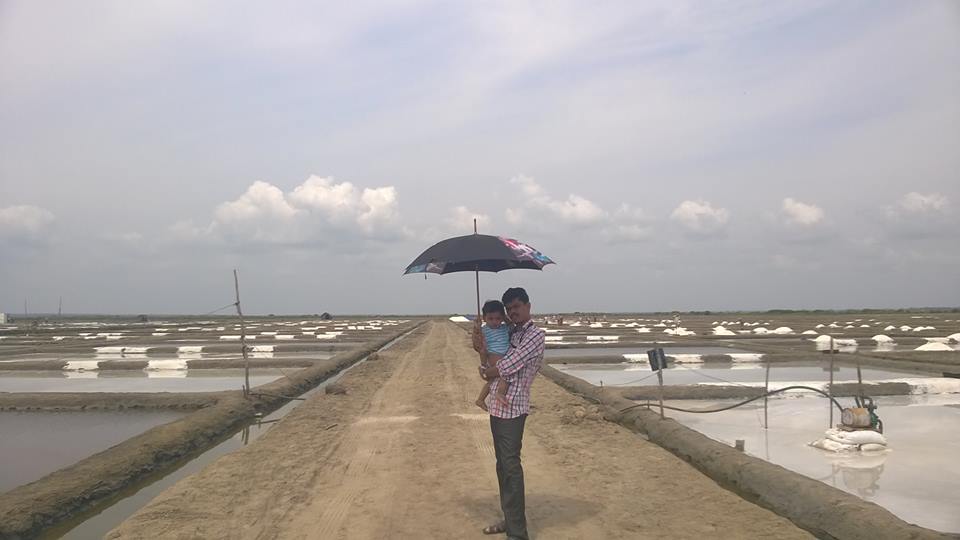
“It turns into salt in just about 3 hours on a sunny day
They periodically check the pans and sweep up the salt after the water crystallizes into salt.
The salt is then dried up in mounds before being filled up in sacks and taken away for processing.

The swept up salt, still dripping wet, is gathered in mounds and left for days to dehydrate.
To prevent the mounds from getting washed in an unlikely event of a rainfall, thatched palm leaves are spread forming a protective layer. The salt, thus stored, is inspected for its consistency after about 10 days and is prepared for loading.

>>----THANKS FOR VISITING MY BLOG...KEEP IN TOUCH------>
Livestock.... cattle rearing india

Livestock plays an important role in Indian economy.
About 20.5 million people depend upon livestock for their livelihood.
The livestock provides food and non-food items to the people.
- Food: The livestock provides food items such as Milk, Meat and Eggs for human consumption.
- Fibre and skins: The livestock also contributes to the production of wool, hair, hides, and pelts. Leather is the most important product which has a very high export .
- Draft: Bullocks are the back bone of Indian agriculture. Despite lot of advancements in the use of mechanical power in Indian agricultural operations, the Indian farmer especially in rural areas still depend upon bullocks for various agricultural operations.
- Dung and other animal waste materials: Dung and other animal wastes serve as very good farm yard manure . In addition it is also used as fuel (bio gas, dung cakes).
- Storage: Livestock are considered as “moving banks” because of their potentiality to dispose off during emergencies. They serve as capital and in cases of landless agricultural labourers many time it is the only capital resource they possess.
- Weed control: Livestock are also used as Biological control of brush, plants and weeds.
- Cultural: Livestock offer security to the owners and also add to their self esteem especially when they are owning prized animals such as pedigreed bulls, dogs and high yielding cows/ buffaloes etc.
- Sports / recreation: People also use the animals like cocks, rams, bulls etc for competition and sports.
- Companion animals: Dogs are known for their faithfulness and are being used as companions since time immemorial. When the nuclear families are increasing in number and the old parents are forced to lead solitary life the dogs, cats are providing the needed company
- Income: Cows and buffaloes in milk will provide regular income to the livestock farmers through sale of milk. Animals like sheep and goat serve as sources of income during emergencies to meet exigencies like marriages, treatment of sick persons, children education, repair of houses etc. The animals also serve as moving banks and assets which provide economic security to the owners.
- Employment: A large number of people in India being less literate and unskilled depend upon agriculture for their livelihoods.
- Food: The livestock products such as milk, meat and eggs are an important source of animal protein to the members of the livestock owners.
- Social security: The animals offer social security to the owners in terms of their status in the society. Gifting of animals during marriages is a very common phenomenon in different parts of the country. Animals are used for various socio religious functions. Cows for house warming ceremonies; rams, bucks and chicken for sacrifice during festive seasons;
- Draft : The bullocks are the back bone of Indian agriculture.
The farmers especially the marginal and small depend upon bullocks for
ploughing, carting and transport of both inputs and outputs.

- Dung: In rural areas dung is used for several purposes which include fuel (dung cakes), fertilizer (farm yard manure)

>>----THANKS FOR VISITING MY BLOG...KEEP IN TOUCH------>
Mamallapuram, or Mahabalipuram.....land between the Bay of Bengal and the Great Salt Lake Tamil Nadu.

Mamallapuram, or Mahabalipuram, is a town on a strip of land between the Bay of Bengal and the Great Salt Lake, in the south Indian state of Tamil Nadu.

It’s known for its temples and monuments built by the Pallava dynasty
in the 7th and 8th centuries. The seafront Shore Temple comprises 3
ornate granite shrines.

Bhima Ratha

Bhima Ratha
Krishna’s Butter Ball is a massive boulder
balanced on a small hill near the Ganesha Ratha stone temple.


The history of Mahabalipuram is an intriguing one. Although its ancient
history remains unclear, numismatics, temples and other sources of
historical evidence suggest that it was a place of significance even
before the temples were built. Some historical facts about Mahabalipuram
are mentioned below:


Arjuna's Penance Dharmaraja Ratha


Arjuna's Penance Dharmaraja Ratha
- Mahabalipuram is a historic city and a UNESCO World Heritage Site
- It became a prominent center of art and literature between 3rd and 7th century .
- Ancient mariners referred to Mahabalipuram as the “land of the Seven Pagodas”.
- Several coins excavated from here reveal the existence of trade with Romans in ancient times.


Subscribe to:
Posts (Atom)
vanchi....Vallam , Thoni,etc.....
These are water transport vessel that carries different names in different regions. The terms Vallam , Thoni,etc. are found in the early...

-
 A mangrove is a shrub or small tree that grows in coastal saline or brackish water . The term is also used for tropical coastal vegetati...
 -
 The Mudumalai National Park and Wildlife Sanctuary also a declared tiger reserve, lies on the northwestern side of the Nilgiri Hills in...