Monday, 10 September 2018

PONMUDI(hill station)....trivandrum...kerala


climbing at an altitude of 610 m, Ponmudi (meaning the Golden Peak ) is the least haunted by tourists and therefore the most peaceful of all Kerala hill stations.

              view point                                                                with my kid in ponmudi

 22 hairpin curves, and misty peaks thronged by an exotic vegetation, Ponmudi is a hiker's and trekker's paradise.

 At a distance of 61 km from Thiruvanthapuram, Ponmudi offers to soothe your work worn mind and body to rejuvenation.

      at 3pm with my family                                                  in fog...

Hike through the slopes of tea gardens to watch the peoples at work or fish in the emerald waters of the Kallar River to make the most of Ponmudi beutiful.

                                                                                                                   cafeteria

What is the best time to visit Ponmudi?

The best time to visit Ponmudi is between November to May. This is the time when the weather in Ponmudi is very favourable for travel.


 Ponmudi Trivandrum Phone 09875 123459
Ponmudi Trivandrum Address:
Ponmudi, Thiruvananthapuram, Kerala, 695551, India

Ponmudi Trivandrum Timings 10 am to 6 pm

>>----THANKS FOR VISITING MY BLOG...KEEP IN TOUCH------>

HOGENAKKAL (TOURIST PLACE..TAMIL;NADU)


 At a distance of 47 km from Dharmapuri, 88 km from Hosur, 85 km from Salem, 146 km from Bangalore, 345 km from Chennai, 180 km from Mysore, 114 km from Yercaud and 217 km from Coimbatore,
Hogenakkal Falls is a waterfall in on the Kaveri  River located in Dharmapuri district of Tamil Nadu.
 It is a major waterfalls near Bangalore and also one of the best waterfalls in India, sometimes referred to as the 'Niagara of India'.

Hogenakkal is also one of the best waterfalls and one of the wonderful tourist places to visit near Bangalore & Chennai. When the River Kaveri enters the Tamil Nadu border after winding its way through the state of Karnataka, it descends down the lofty landscape forming the Hogenakkal Waterfalls.

 The Carbonatite rocks found near the waterfall are one of the oldest in the world. The two Kannada words 'Hoge' means 'Smoke' and 'Kal' means 'Rocks' give meaning to the word Hogenakkal as Smoky Rocks. It is also called as Marikottayam by the people of Tamil Nadu.

The falls has about 14 channels with drops varying between 15 & 65 ft. To reach the surroundings of waterfalls one needs to take a boat-ride (there is no land access).

 Coracle riding is one of the main attractions here which is allowed during the monsoon and winter season. Boating is usually stopped in peak monsoons.

Hogenakkal is also the good place to try out your swimming skills. The water is quite challenging. Tourists can also go for trekking on the nearby surrounding hills.
The water from the fall flows towards the Mettur Dam which is also known as the Stanley Reservoir.

The falls are less than 1 km from Hogenakkal Bus Station. There are no good food points near the falls, except simple snacks, soft drinks & fish fry. If possible, try to pack your food near Hogenakkal Bus Station or Dharmapuri. There are many lodges and mid-range options of accommodation in Dharmapuri.

(we stayed in hotel tamilnadu......near to waterfall)
The Nearest airport is Bangalore International Airport about 216 km from Hogenakal Falls. Dharmapuri is the nearest railway station, which is about 47 km from Hogenakal.
It is connected by rail with Bangalore, Mumbai, Trivandrum, Tuticorin, Coimbatore, Salem, Nagarcoil, Mysore, Pondicherry, Tirunelveli and Ernakulum. Dharmapuri is the nearest major Bus station to Hogenakkal.
 It has buses from Bangalore, Mysore, Salem, Coimbatore, Chennai, Trivandrum, Kochi, Ooty, Madurai and Hyderabad.

The best time to visit Hogenakkal Falls is from July to October while the peak season is from August to October. Usually it takes one half day to visit Hogenakkal Falls.

Address: Dharmapuri-Hogenakkal Road, Dist.Hogenakkal, Hogenakkal, Tamil Nadu 636810
Hours:
Open ⋅ Closes 5:30PM
Elevation: 700 m (2,300 ft)
Phone: 044 2533 3850

>>----THANKS FOR VISITING MY BLOG...KEEP IN TOUCH------>

peacock(PEAFOWL)


Peacock, any of three species of resplendent birds of the pheasant family, Phasianidae (order Galliformes).
 Strictly, the male is a peacock, and the female is a peahen; both are peafowl.
The two most-recognizable species of peafowl are the blue, or Indian, peacock (Pavo cristatus), of India and Sri Lanka, and the green, or Javanese, peacock (P. muticus), found from Myanmar (Burma) to Java. 


Natural history

In both species of Pavo, the male has a 90–130-cm (35–50-inch) body and 150-cm (60-inch) train of tail feathers that are coloured a brilliant metallic green. This train is mainly formed of the bird’s upper tail coverts, which are enormously elongated. Each feather is tipped with an iridescent eyespot that is ringed with blue and bronze.

In courtship displays, the cock elevates his tail, which lies under the train, thus elevating the train and bringing it forward. At the climax of this display, the tail feathers are vibrated, giving the feathers of the train a shimmering appearance and making a rustling sound.

 In the wild, both species live in open lowland forests, flocking by day and roosting high in trees at night. During the breeding season, the male forms a harem of two to five hens, each of which lays four to eight whitish eggs in a depression in the ground.

The eggs are incubated by the peahen until they hatch some 28 days later. The chicks have all of their feathers when they emerge from their eggs and are capable of flight roughly one week after hatching. 


Conservation status

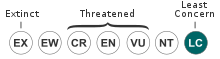
The International Union for Conservation of Nature (IUCN) Red List classifies the blue peafowl as a species of least concern.
However, the green peacock, whose population declined significantly during the latter half of the 20th century because of overhunting and the destruction of large parts of its natural habitat, is classified by the IUCN as an endangered species.
The IUCN has classified the Congo peafowl, which has also experienced declines because of hunting and habitat loss, as a vulnerable species.
>>----THANKS FOR VISITING MY BLOG...KEEP IN TOUCH------>

Gingee fort.....Viluppuram district of Tamil Nadu

Address: NH 66, Gingee, Tamil Nadu 604202
Hours:
Open ⋅ Closes 5PM
Built: 9th century and 13th century
Built by: Initially Senjiyar kon kadavan and later Chola Dynasty, Vijayanagara Empire
>>----THANKS FOR VISITING MY BLOG...KEEP IN TOUCH------>

WILD BOAR


The Indian boar (Sus scrofa cristatus), also known as the Andamanese pig or Moupin pig is a subspecies of wild boar native to India, Nepal, Burma, western Thailand and Sri Lanka.

The Indian boar differs from its European counterpart by its large mane which runs in a crest along its back from its head to lower body, larger, more sharply featured and straighter skull, its smaller, sharper ears and overall lighter build.

 It is taller and more sparsely haired than the European form, though its back bristles are much more developed. The tail is also more tufted, and the cheeks hairier.
 Adults measure from 83.82 to 91.44 cm  in shoulder height  and five feet in body length. Weight ranges from 90.72 to 136.08 kg


Scientific classification
Kingdom: Animalia

Phylum: Chordata

Class: Mammalia

Order: Artiodactyla

Family: Suidae

Genus: Sus
Species: S. scrofa
Subspecies: S. s. cristatus
Trinomial name
Sus scrofa cristatuThe gestation period varies according to the age of the expecting mother. For first time breeders, it lasts 114–130 days, while it lasts 133–140 days in older sows. Farrowing occurs between March and May, with litter sizes depending on the age and nutrition of the mother. The average litter consists of 4–6 piglets, with the maximum being 10–12.
The piglets are whelped in a nest constructed from twigs, grasses and leaves. Should the mother die prematurely, the piglets are adopted by the other sows in the sounder.
Newborn piglets weigh around 600–1,000 grams, lacking underfur and bearing a single milk incisor and canine on each half of the jaw.

 The piglets do not leave the lair for their first week of life. Should the mother be absent, the piglets lie closely pressed to each other. By two weeks of age, the piglets begin accompanying their mother on her journeys. Should danger be detected, the piglets take cover or stand immobile, relying on their camouflage to keep them hidden. The neonatal coat fades after three months, with adult colouration being attained at eight months. Although the lactation period lasts 2.5–3.5 months, the piglets begin displaying adult feeding behaviors at the age of 2–3 weeks.
 attain sexual maturity at the age of one year, with males attaining it a year later. 


>>----THANKS FOR VISITING MY BLOG...KEEP IN TOUCH------>

Sunday, 9 September 2018

jungle fowl

Grey junglefowl


Gallus sonneratii (Bandipur), crop.jpg


Scientific classification
Kingdom: Animalia

Phylum: Chordata

Class: Aves

Order: Galliformes

Family: Phasianidae

Genus: Gallus

Species: G. sonneratii
Binomial name
Gallus sonneratii


The grey junglefowl (Gallus sonneratii), also known as Sonnerat's junglefowl, is one of the wild ancestors of domestic fowl together with the red junglefowl and other junglefowls.

A gene from the grey junglefowl is responsible for the yellow pigment in the legs and different body parts of all the domesticated chicken.

This species is endemic to India, and even today it is found mainly in peninsular India and towards the northern boundary. It will sometimes hybridize in the wild with the red junglefowl.

 It also hybridizes readily in captivity and sometimes with free-range domestic fowl kept in habitations close to forests.

 Local names include Komri in Rajasthan, Geera kur or Parda komri in Gondi, Jangli Murghi in Hindi, Raan kombdi in Marathi, Kattu Kozhi in Tamil and Malayalam, Kaadu koli in Kannada and Tella adavi kodi in Telngu

Description

The male has a black cape with ochre spots and the body plumage on a grey ground colour is finely patterned. The elongated neck feathers are dark and end in a small, hard, yellowish plate; this peculiar structure making them popular for making high-grade artificial flies.


 The male has red wattles and combs but not as strongly developed as in the red junglefowl. Legs of males are red and have spurs while the yellow legs of females usually lack spurs.

 The central tail feathers are long and sickle shaped. Males have an eclipse plumage in which they moult their colourful neck feathers in summer during or after the breeding season.

The female is duller and has black and white streaking on the underparts and yellow legs.

They are found in thickets, on the forest floor and open scrub. Their loud calls of Ku-kayak-kyuk-kyuk are loud and distinctive, and can be heard in the early mornings and at dusk. Unlike the red junglefowl, the male does not flap its wing before uttering the call.

They lay 4 to 7 eggs which are pale creamy in a scrape. Eggs hatch in about 21 days. Although mostly seen on the ground, grey junglefowl fly into trees to escape predators and to roost.

They feed on grains including bamboo seeds, berries, insects and termites, and are hunted for meat and for the long neck hackle feathers that are sought after for making fishing lures.

>>----THANKS FOR VISITING MY BLOG...KEEP IN TOUCH------>

Villoondi theertham ......


Villoondi theertham is a famous tourist attraction in Rameshwaram .
 It is one of the beaches  and also one of the 64 theerthas (sacred water body) in Rameswaram.
It is situated 6 Km far from Rameswaram main bus stand. Villoondi theertham beach is a calm place with the silent  tides.

 There is a good water spring situated inside the sea ,it is the main attraction of this place.


Address: 
Thangachi madam, Rameswaram - 623526, Tamilnadu, Thangachimadam, Tamil Nadu 623526

>>----THANKS FOR VISITING MY BLOG...KEEP IN TOUCH------>

vanchi....Vallam , Thoni,etc.....

  These are water transport vessel that carries different names in different regions.   The terms Vallam , Thoni,etc. are found in the early...