Monday, 10 September 2018

Gingee fort.....Viluppuram district of Tamil Nadu

Address: NH 66, Gingee, Tamil Nadu 604202
Hours:
Open ⋅ Closes 5PM
Built: 9th century and 13th century
Built by: Initially Senjiyar kon kadavan and later Chola Dynasty, Vijayanagara Empire
>>----THANKS FOR VISITING MY BLOG...KEEP IN TOUCH------>

WILD BOAR


The Indian boar (Sus scrofa cristatus), also known as the Andamanese pig or Moupin pig is a subspecies of wild boar native to India, Nepal, Burma, western Thailand and Sri Lanka.

The Indian boar differs from its European counterpart by its large mane which runs in a crest along its back from its head to lower body, larger, more sharply featured and straighter skull, its smaller, sharper ears and overall lighter build.

 It is taller and more sparsely haired than the European form, though its back bristles are much more developed. The tail is also more tufted, and the cheeks hairier.
 Adults measure from 83.82 to 91.44 cm  in shoulder height  and five feet in body length. Weight ranges from 90.72 to 136.08 kg


Scientific classification
Kingdom: Animalia

Phylum: Chordata

Class: Mammalia

Order: Artiodactyla

Family: Suidae

Genus: Sus
Species: S. scrofa
Subspecies: S. s. cristatus
Trinomial name
Sus scrofa cristatuThe gestation period varies according to the age of the expecting mother. For first time breeders, it lasts 114–130 days, while it lasts 133–140 days in older sows. Farrowing occurs between March and May, with litter sizes depending on the age and nutrition of the mother. The average litter consists of 4–6 piglets, with the maximum being 10–12.
The piglets are whelped in a nest constructed from twigs, grasses and leaves. Should the mother die prematurely, the piglets are adopted by the other sows in the sounder.
Newborn piglets weigh around 600–1,000 grams, lacking underfur and bearing a single milk incisor and canine on each half of the jaw.

 The piglets do not leave the lair for their first week of life. Should the mother be absent, the piglets lie closely pressed to each other. By two weeks of age, the piglets begin accompanying their mother on her journeys. Should danger be detected, the piglets take cover or stand immobile, relying on their camouflage to keep them hidden. The neonatal coat fades after three months, with adult colouration being attained at eight months. Although the lactation period lasts 2.5–3.5 months, the piglets begin displaying adult feeding behaviors at the age of 2–3 weeks.
 attain sexual maturity at the age of one year, with males attaining it a year later. 


>>----THANKS FOR VISITING MY BLOG...KEEP IN TOUCH------>

Sunday, 9 September 2018

jungle fowl

Grey junglefowl


Gallus sonneratii (Bandipur), crop.jpg


Scientific classification
Kingdom: Animalia

Phylum: Chordata

Class: Aves

Order: Galliformes

Family: Phasianidae

Genus: Gallus

Species: G. sonneratii
Binomial name
Gallus sonneratii


The grey junglefowl (Gallus sonneratii), also known as Sonnerat's junglefowl, is one of the wild ancestors of domestic fowl together with the red junglefowl and other junglefowls.

A gene from the grey junglefowl is responsible for the yellow pigment in the legs and different body parts of all the domesticated chicken.

This species is endemic to India, and even today it is found mainly in peninsular India and towards the northern boundary. It will sometimes hybridize in the wild with the red junglefowl.

 It also hybridizes readily in captivity and sometimes with free-range domestic fowl kept in habitations close to forests.

 Local names include Komri in Rajasthan, Geera kur or Parda komri in Gondi, Jangli Murghi in Hindi, Raan kombdi in Marathi, Kattu Kozhi in Tamil and Malayalam, Kaadu koli in Kannada and Tella adavi kodi in Telngu

Description

The male has a black cape with ochre spots and the body plumage on a grey ground colour is finely patterned. The elongated neck feathers are dark and end in a small, hard, yellowish plate; this peculiar structure making them popular for making high-grade artificial flies.


 The male has red wattles and combs but not as strongly developed as in the red junglefowl. Legs of males are red and have spurs while the yellow legs of females usually lack spurs.

 The central tail feathers are long and sickle shaped. Males have an eclipse plumage in which they moult their colourful neck feathers in summer during or after the breeding season.

The female is duller and has black and white streaking on the underparts and yellow legs.

They are found in thickets, on the forest floor and open scrub. Their loud calls of Ku-kayak-kyuk-kyuk are loud and distinctive, and can be heard in the early mornings and at dusk. Unlike the red junglefowl, the male does not flap its wing before uttering the call.

They lay 4 to 7 eggs which are pale creamy in a scrape. Eggs hatch in about 21 days. Although mostly seen on the ground, grey junglefowl fly into trees to escape predators and to roost.

They feed on grains including bamboo seeds, berries, insects and termites, and are hunted for meat and for the long neck hackle feathers that are sought after for making fishing lures.

>>----THANKS FOR VISITING MY BLOG...KEEP IN TOUCH------>

Villoondi theertham ......


Villoondi theertham is a famous tourist attraction in Rameshwaram .
 It is one of the beaches  and also one of the 64 theerthas (sacred water body) in Rameswaram.
It is situated 6 Km far from Rameswaram main bus stand. Villoondi theertham beach is a calm place with the silent  tides.

 There is a good water spring situated inside the sea ,it is the main attraction of this place.


Address: 
Thangachi madam, Rameswaram - 623526, Tamilnadu, Thangachimadam, Tamil Nadu 623526

>>----THANKS FOR VISITING MY BLOG...KEEP IN TOUCH------>

Saturday, 8 September 2018

Mangalavanam Bird Sanctuary.....


Mangalavanam is an ecologically sensitive area situated at the centre of the Indian city of Kochi, covering about 2.74 hectares.

It also houses a shallow tidal lake connected with Kochi backwaters by a canal. It is situated behind the Kerala High Court building. It is a nesting ground for a large variety of migratory birds and supports many types of mangroves.

The Managalavanam is often regarded as the "green lung of Kochi", considering its role in keeping the city's air pollution under check. The area is a roosting place for many kinds of resident and migratory birds.


 The administrative control of the sanctuary is with the Assistant Conservator of Forest and Wildlife Warden Mangalavanam Bird Sanctuary of Nature Study Centre Kalady and then to the Range Officer Research Range Kodanad.


  • Mangalavanam Address: Mathai Manjooran Rd, Ayyappankavu, Ernakulam, Kerala 682018, Kochi, India
  • Mangalavanam Contact Number: +91-4842468680
  • Mangalavanam Timing: 10:00 am - 05:00 pm
  • Mangalavanam Price: Free


  • Best time to visit Mangalavanam(preferred time): 10:00 am - 03:00 pm 

  • >>----THANKS FOR VISITING MY BLOG...KEEP IN TOUCH------>

    Friday, 7 September 2018

    SHEEP


    A domesticated ruminant mammal with a thick woolly coat and curving horns. It is kept in flocks for its wool or meat, and is proverbial for its tendency to follow others in the flock
    .

    Ovis aries, family Bovidae, 


    >>----THANKS FOR VISITING MY BLOG...KEEP IN TOUCH------>

    jew town...MATTANCHERRY

    Jew Town, a narrow street between Mattancherry Palace and the Synagogue, is a favourite haunt of antique hunters.
     Some of the most pristine and historically relevant artefacts of our times have been unearthed by our visitors here. While a huge bronze vessel catches your eye first, each of the shops here contains beautiful items with quirky and interesting stories. 
    Nearest railway station: Ernakulam, about 10 km
    Nearest airport: Cochin International Airport, about 42 km

    >>----THANKS FOR VISITING MY BLOG...KEEP IN TOUCH------>

    MARITIME HERITAGE MUSEUM...WILINGDON ISLAND.

    EVOLUTION OF THE MODERN PORT OF COCHIN AND CREATION OF WILINGDON ISLAND


    Willingdon Island is the largest artificial island in India, which forms part of the city of Kochi, in the state of Kerala. Much of the present Willingdon Island was claimed from the Lake of Kochi, filling in dredged soil around a previously existing, but tiny, natural island.

      Willingdon Island is significant as the home for the Port of Kochi, as well as the Kochi Naval Base (the Southern Naval Command) of the Indian Navy, Custom House Cochin  and Central Institute of Fisheries Technology, a constituent unit of Indian Council of Agricultural Research.
    The island is also home for other establishments associated with the port, namely, the Office of the Cochin Port Trust (that controls the Port of Kochi), the Customs Office, and more than two dozen export-import offices, warehouses, a few hotels and business centers.

    History

    Conception

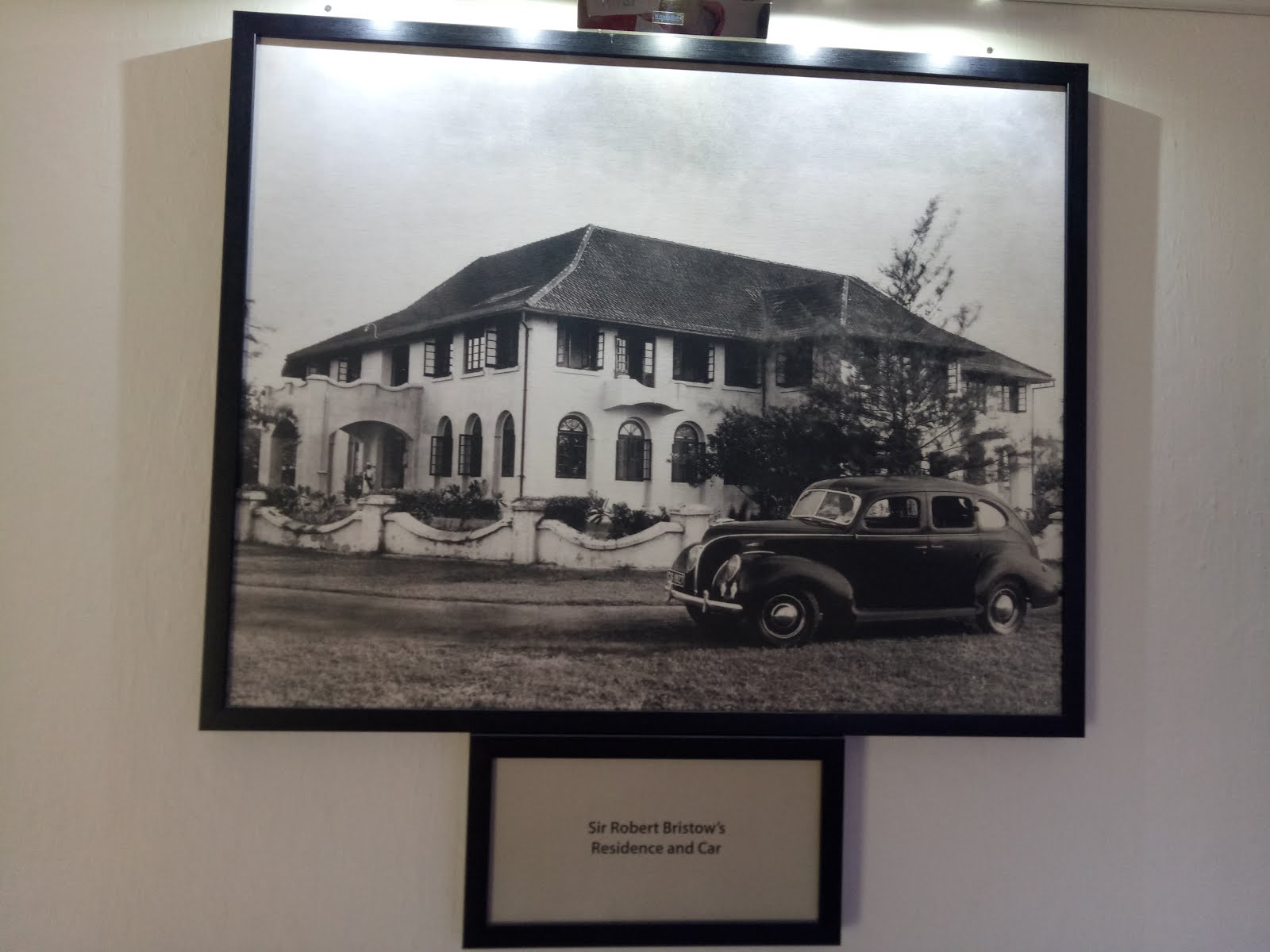
    The idea of developing a new port in Kochi was first felt by Sir Robert Bristow,

     who was appointed by Lord Willingdon, then-the Governor of Madras Presidency, to create a new modern port on the West coast of India at Kochi.

    Construction

    The island was created during the construction of modern port in 1936, with the soil dredged out while deepening the Vembanad Lake to accommodate the new port. It was named after The 1st Earl of Willingdon, the Viceroy of India at the time, who commissioned the project.
     Robert Bristow, the chief protagonist and engineer for the project, owned the first building on the island.
    The first liner, which belonged to the Bibby Line, arrived at the island on 9 March 1935. A port hostel, called Malabar Hotel, was built for passengers who wished to rest on the island.
    All the pre-planned basic port structure was completed in 1939, just in time for the Second World War.
    A deep wharf, a rail bridge and a road bridge to the mainland provided valuable infrastructure for the local war effort.  A naval works was also constructed on the adjacent Venduruthy Island to the south, where, by the end of the war, they were busily constructing landing craft for the presumed invasion of Japan.
     In 1940 a passenger jetty and customs house were built adjoining the hotel, together with a passenger platform and rail siding.

    British military 

    The Royal Air Force quickly found use for this flat expanse of conveniently located virgin territory, and constructed a large aerodrome. The artificial island thus became a thriving military base

    1947

    Control of the transport hub was transferred from the British Empire to India in 1947, when the latter gained independence.[During its short colonial tenure the island had handled at most one million tons of freight, by 1960 this had almost doubled. The island aerodrome was extensively developed and became the city’s modern airport. Nowadays Kochi has an international Airport at Nedumbassery, 25 km north-east of the city, while the airstrip on the island turned into the naval air station INS Garuda.  Willingdon Island is connected to the mainland by Venduruthy Bridge, which has road and railway links. The headquarters of the Southern Naval Command of the Indian Navy is located on the island. Cochin shipyard  is also located near this island. It is also a major tourist centre.

    Apart from these, it is here that the airport used to be positioned (until it was moved to present location in Nedumbassery near Kochi) along with the shipbuilding yard, wharf, the Southern Naval Command Headquarters and the customs house. Cochin Chamber of Commerce and Industries has been strategically placed here, as is the Government of India Tourist Information Office in the vicinity of the airport. This island is a hub of activity with a number of offices, branches of national and international banks, travel agencies and souvenir shop warehouses.


    >>----THANKS FOR VISITING MY BLOG...KEEP IN TOUCH------>

    Chinese fishing nets(Cheena vala)

    Chinese fishing nets (Cheena vala) are a type of stationary lift net in India.

    They are fishing nets that are fixed land installations for fishing. While commonly known as "Chinese fishing nets" in India, the more formal name for such nets is "shore operated lift nets". Huge mechanical contrivances hold out horizontal nets of 20 m or more across. Each structure is at least 10 m high and comprises a cantilever with an outstretched net suspended over the sea and large stones suspended from ropes as counterweights at the other end.

     Each installation is operated by a team of up to six fishermen. in India they are mostly found in the Indian cities of Kochi and Kollam, where they have become a tourist attraction. This way of fishing is unusual in India and almost unique to the area, as it was introduced by Chinese explorers who landed there in the 14th century. Indeed, one interpretation of the city name Kochi is ‘co-chin', meaning ‘like China.
    The system is sufficiently balanced that the weight of a man walking along the main beam is sufficient to cause the net to descend into the sea. The net is left for a short time, possibly just a few minutes, before it is raised by pulling on ropes.
     The catch is usually modest: a few fish and crustaceans, which may be sold to passers-by within minutes.
    Rocks, each 30 cm or so in diameter, are suspended from ropes of different lengths. As the net is raised, some of the rocks one-by-one come to rest on a platform thereby keeping everything in balance.

    The nets may have been introduced by the Chinese explorer Zheng He.
    The Chinese fishing nets have become a very popular tourist attraction. Their size and elegant construction is photogenic and the slow rhythm of their operation is quite hypnotic.


    THANKS FOR VISITING MY BLOG...KEEP IN TOUCH.

    vanchi....Vallam , Thoni,etc.....

      These are water transport vessel that carries different names in different regions.   The terms Vallam , Thoni,etc. are found in the early...